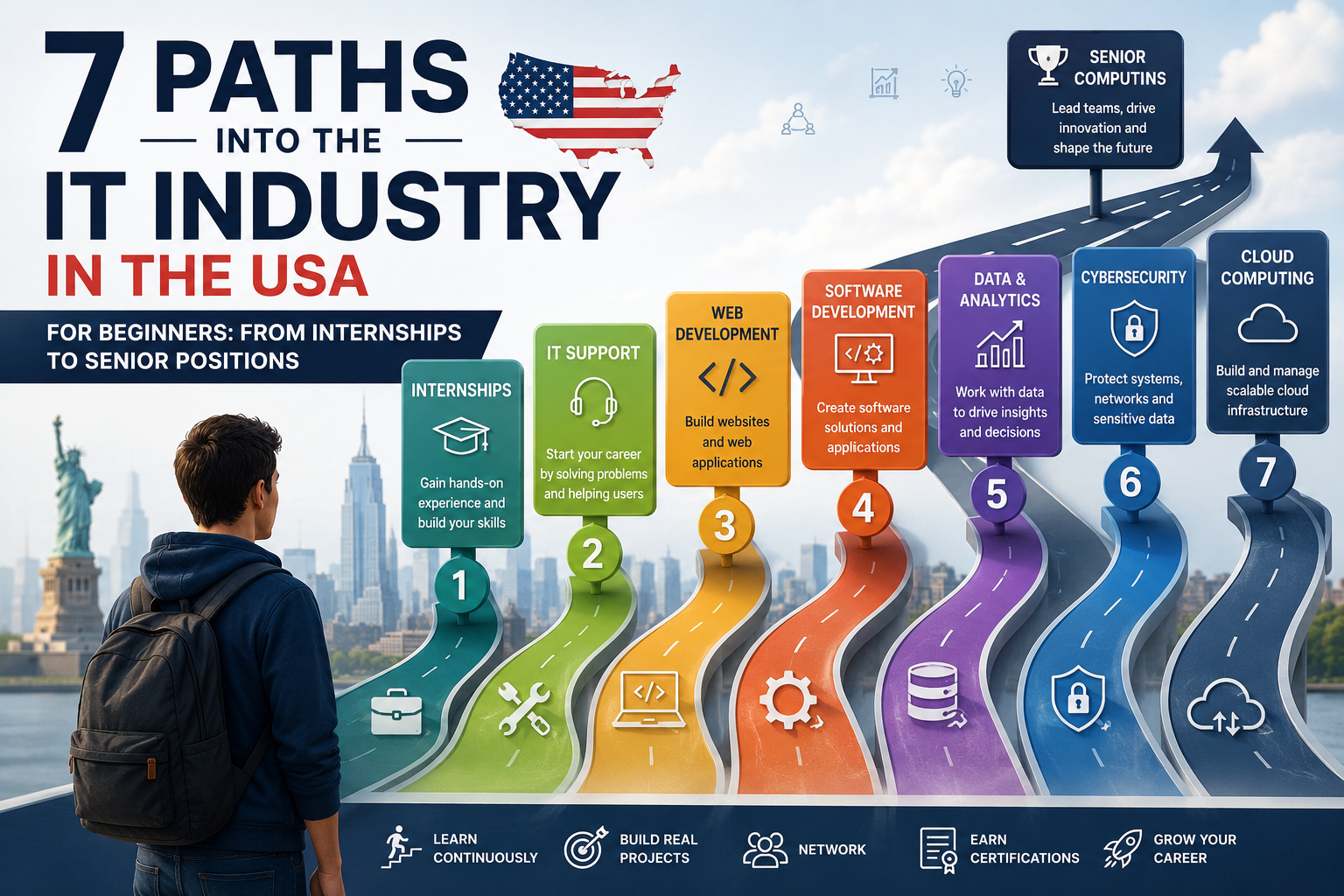
 The information technology industry in the United States stands as one of the most dynamic and rewarding career sectors today. With the median IT salary exceeding $100,000 annually and demand continuing to surge across every major industry, breaking into tech has never been more accessible for beginners. However, with so many entry points and specializations, the journey can feel overwhelming. This comprehensive guide explores seven proven pathways that beginners can take to launch successful careers in American IT, whether you’re transitioning from another field, graduating from college, or starting fresh after high school.
1. The Traditional Computer Science Degree Path
The most conventional route remains a four-year Bachelor’s degree in Computer Science, Computer Engineering, or Information Systems from an accredited university. This pathway provides structured learning, strong foundational knowledge, and direct access to university recruiting programs from major tech companies like Google, Microsoft, Apple, and Amazon.
Why it works: Tech companies still value formal degrees, especially for entry-level positions. University career services offices actively host recruiting events, and many companies have dedicated campus recruitment programs offering competitive salaries to new graduates—often $80,000 to $130,000 for software engineers in major tech hubs.
Timeline: Four years of study plus potential internships during summers.
Cost consideration: Tuition ranges widely, but many students offset costs through scholarships, grants, and work-study programs. Consider whether the investment aligns with your financial situation, as student loan debt can reach $100,000+.
2. The Coding Bootcamp Express Route
Intensive coding bootcamps have revolutionized tech entry. Programs like General Assembly, Springboard, Flatiron School, and dozens of others compress years of learning into 8-16 weeks of immersive training in full-stack development, web development, or specialized skills like data science.
Why it works: Bootcamps focus on job-ready skills rather than theoretical foundations. Graduates often complete real-world projects, build portfolios, and receive direct job placement support. Many bootcamps operate on income share agreements, where you pay tuition only after landing a job.
Timeline: 8 to 16 weeks of intensive study, often while working other jobs (part-time options available).
Cost consideration: $10,000 to $20,000 upfront, sometimes deferred through income sharing.
Real outcome: Bootcamp graduates frequently land junior developer roles earning $60,000 to $85,000 in their first position, with rapid salary growth within 2-3 years.
3. The Self-Taught Developer Path
Not everyone needs formal training. Thousands of successful programmers learned entirely through free and paid online resources: Codecademy, freeCodeCamp, Udemy, Coursera, YouTube tutorials, and countless coding challenge platforms like LeetCode and HackerRank.
Why it works: Self-teaching demands discipline but offers complete flexibility. You learn at your own pace, choose your specialization, and can build an impressive GitHub portfolio while working a day job. Many hiring managers care more about demonstrated skills than credentials.
Timeline: Highly variable—typically 6 months to 2 years depending on dedication and prior experience.
Cost consideration: Free to a few hundred dollars if using premium platforms.
Key to success: You must build real projects and contribute to open-source work to prove capability to potential employers who lack the credential baseline.
4. The Internship-to-Full-Time Pipeline
Landing an internship—whether paid or unpaid—remains one of the fastest tickets into corporate IT. Major corporations and startups actively recruit interns for 3-6 month placements, often during summer breaks or as part-time arrangements during school.
Why it works: Companies use internships as low-risk hiring pipelines. You gain real-world experience, make industry connections, and create a resume that resonates with hiring managers. Many interns transition directly to full-time roles upon graduation or completion of the program.
Timeline: Typically 3-6 months for an individual internship, though many students complete 2-3 internships before graduation.
Compensation: Internship pay ranges from $0 (unpaid, illegal for most for-profit companies now) to $25-40/hour for competitive tech internships at established firms.
Pro tip: Competitive internships at FAANG companies (Facebook/Meta, Apple, Amazon, Netflix, Google) pay $20-45/hour plus housing stipends, making them financially viable even for students with limited resources.
5. The Government and Defense Contracting Route
If you prefer stability, comprehensive benefits, and a clear career ladder, US government agencies and defense contractors actively recruit IT professionals. Agencies like NASA, the Department of Defense, NSA, and major contractors like Lockheed Martin, Raytheon, and Northrop Grumman hire thousands of tech workers annually.
Why it works: Federal positions offer excellent job security, competitive salary and benefits packages, full healthcare coverage, and pension opportunities. The barrier to entry is lower than elite tech companies—you don’t need Ivy League credentials or deep tech background.
Timeline: Application to hiring can take 2-6 months due to security clearance processes.
Compensation: Federal IT positions start at GS-5 or GS-7 levels ($33,000-$43,000) and quickly advance. Contractors often pay 20-30% more than government positions for equivalent roles.
Requirement: US citizenship and ability to obtain a security clearance (generally requires clean background).
6. The Healthcare and Financial IT Specialist Track
Industries outside traditional tech desperately need IT professionals. Healthcare systems, hospitals, pharmaceutical companies, and financial institutions—banks, insurance companies, investment firms—employ more IT workers than Silicon Valley.
Why it works: These industries face acute talent shortages, offer strong job security, and provide excellent salary and benefits. They’re often more flexible about hiring non-traditional candidates and value domain expertise (healthcare knowledge, financial acumen) alongside technical skills.
Timeline: Entry-level positions typically accessible within 6-12 months of acquiring relevant certifications.
Compensation: Healthcare IT salaries range from $60,000-$100,000+ for specialists; financial IT roles often exceed $110,000 with bonuses.
Example path: Obtain a CompTIA A+ certification or healthcare IT certification, apply to major hospital networks or insurance companies, advance into systems administration or cybersecurity roles.
7. The Cybersecurity and Specialized Certifications Route
If you’re starting later in your career or lack a technical background, professional certifications can be your fastest path. Cybersecurity certifications like CompTIA Security+, Certified Ethical Hacker (CEH), or CISSP are highly valued and can lead to well-paying roles.
Why it works: Cybersecurity represents the fastest-growing IT sector in America. Companies desperately need security professionals and are willing to hire based on certifications and demonstrated knowledge, even without formal education. Salary growth is exceptional—junior security analysts earn $70,000-$90,000, while senior roles exceed $150,000.
Timeline: 3-6 months to prepare for and pass certification exams.
Cost consideration: $200-$1,000 per certification exam, plus study materials.
Career acceleration: Unlike most entry-level IT roles, cybersecurity certifications often lead directly to positions paying $85,000+, with rapid advancement if you demonstrate initiative.
Finding Your First IT Position: Practical Resources
Whichever path you choose, the job search itself requires strategy. Many beginners feel lost navigating the landscape of IT positions, levels, and opportunities across different regions and companies.
For comprehensive job searching, consider using specialized platforms dedicated to tech careers. One effective resource is jobs-in.us, which aggregates IT positions across the entire United States, allowing you to filter by experience level, location, and specific technology stack. This makes it easier to identify entry-level opportunities that match your skill set and geographic preferences.
Additional Search Strategy Tips:
Leverage your network: Attend industry meetups, tech conferences, and university career fairs. Many positions are filled through referrals before they’re ever posted publicly. LinkedIn is invaluable—connect with alumni, recruiters, and professionals in roles you aspire to.
Build your portfolio: Whether you’re self-taught, bootcamp-trained, or degree-educated, a strong portfolio of personal projects or open-source contributions is worth more than credentials to many hiring managers. Create a GitHub profile, deploy projects to cloud platforms (AWS, Heroku, Vercel), and be prepared to discuss your work in technical interviews.
Practice coding interviews: Most tech companies, regardless of which path you take, will ask you to solve algorithmic problems. Dedicate 4-8 weeks before interviews to consistent LeetCode or HackerRank practice.
Target the right companies: Startups and mid-size companies often hire less rigidly than FAANG. If you’re early in your career, consider applying to growing companies where you’ll get broader exposure and faster advancement.
Negotiate thoughtfully: Your first offer matters. Even small differences in starting salary compound dramatically over your career. Research typical salaries for your role and location using Glassdoor, Levels.fyi, and Blind.
Timeline Expectations and Salary Progression
Here’s what a typical IT career arc looks like in America:
- Year 0 (Entry): Junior Developer/IT Technician: $50,000-$75,000
- Years 1-2: Mid-level positions: $75,000-$95,000
- Years 3-5: Senior/specialist roles: $95,000-$130,000
- 5+ years: Lead, architect, or management roles: $130,000-$200,000+
Salaries vary significantly by location (San Francisco, New York, and Seattle command 30-50% premiums) and specialization (Machine Learning, DevOps, and security professionals earn 20-40% above average).
Choosing Your Path
The right pathway depends on your circumstances:
- Recent high school grad with limited funds? Self-teaching or community college programs leading to bootcamp.
- Career-changer with a decade of work experience? Bootcamp or specialized certifications offer the fastest pivot.
- Traditional student with parental support? Four-year degree opens the most doors with FAANG companies.
- Seeking stability and good benefits? Government or contracting positions provide that security.
- Want specialized, high-paying niche? Cybersecurity certifications deliver fastest ROI.
Conclusion
The United States IT industry remains one of the most accessible career paths for motivated individuals, regardless of background. Whether you pursue a traditional degree, coding bootcamp, self-directed learning, internships, or specialized certifications, pathways to six-figure careers exist. The key is choosing a path aligned with your life circumstances, committing fully to skill development, and strategically navigating your job search with tools and strategies designed for today’s tech market.
The barrier to entry has never been lower. The question isn’t whether you can enter IT—it’s which path best fits your situation and how quickly you’re willing to commit to mastering the required skills.